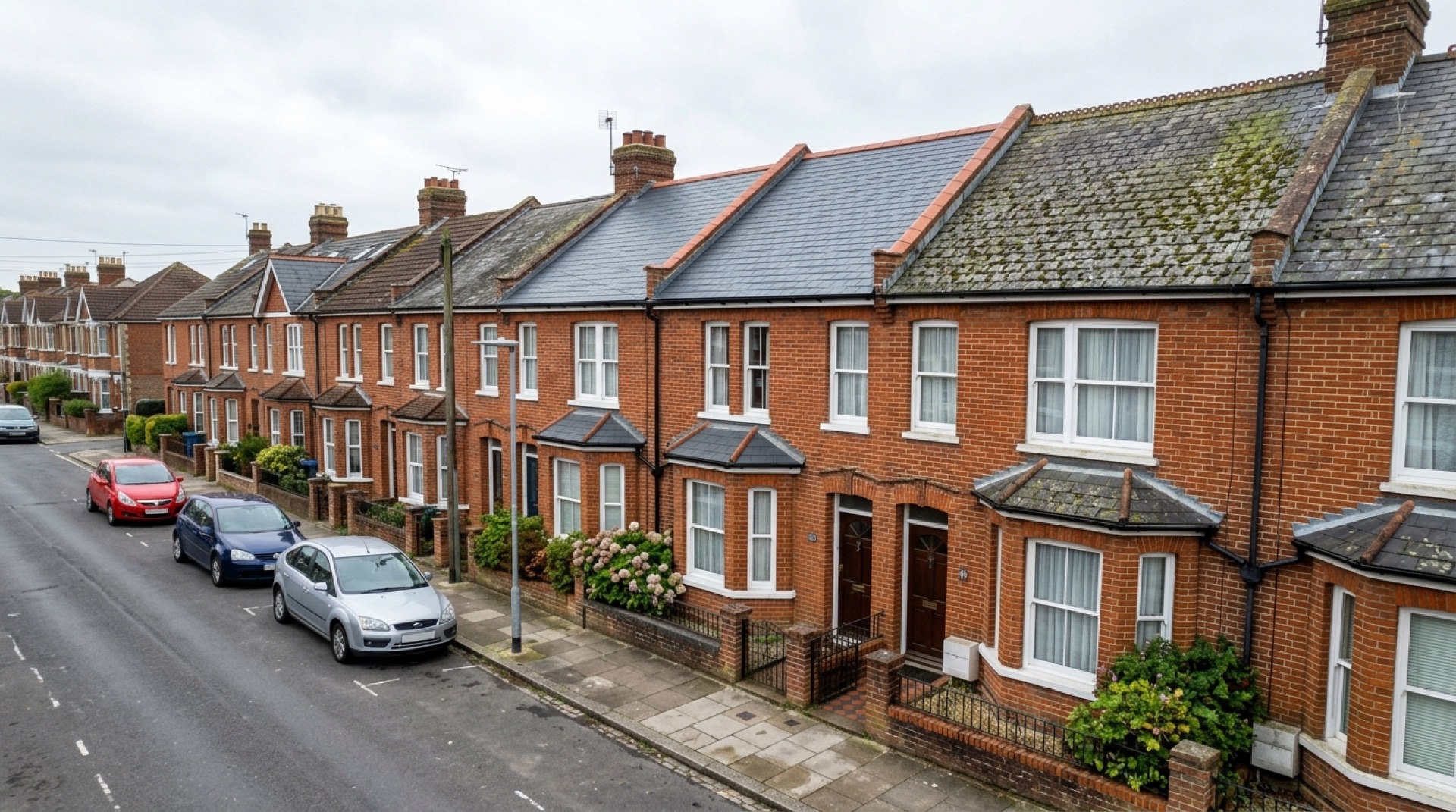
What roof cleaning involves
A roof clean generally removes moss, algae, lichen and loose debris from the surface of tiles or slates, along with any build-up sitting in valleys or against a chimney stack. Some installers also treat the roof afterwards to slow down regrowth. The exact approach depends on the roof type, its pitch, and how much growth has built up.
Soft washing and pressure washing
Most installers working on pitched, tiled roofs favour a lower-pressure approach — sometimes called soft washing — using a biocide or fungicide treatment rather than a high-pressure jet wash. A jet wash held too close to older or more brittle tiles can crack them, strip off the protective granules, or force water underneath the tiles and into the roof structure. It's worth asking any installer which method they use and why, particularly if your roof is older or made of a softer material.
Gutters, valleys and hidden problem spots
Moss and leaf litter tend to collect first in roof valleys, around chimney stacks, and in gutters — anywhere water sits rather than running straight off. A gutter that's blocked with moss and debris can overflow during heavy rain and, over time, contribute to damp around the fascia and soffit boards. Many installers will offer to clear gutters as part of a roof clean, since the two jobs go hand in hand.
How often does a roof actually need cleaning
There's no fixed answer — it depends on the roof's pitch, its aspect, and how much overhanging tree cover there is nearby. A steep, sunny, south-facing roof with no trees nearby may barely need attention, while a shaded, low-pitched roof under overhanging branches can grow moss quickly. Rather than working to a fixed rule, it's more useful to have a look, or ask an installer to have a look, and judge the roof on what's actually growing on it.
Comparing installers
Because roof work happens at height and on a surface you can't easily inspect afterwards, it's worth taking a little time before choosing who does it. Ask what method they'll use, whether they'll clear gutters as part of the job, how they plan to access the roof, and get a written quote before anything starts. It's also sensible to check an installer's own insurance and any trade credentials directly with them, rather than assuming.
Frequently asked questions
Do you carry out the roof cleaning yourselves?+
No. This site is a referral service — we pass your enquiry to one local installer who covers your area, and they carry out the work directly with you.
Will cleaning remove all the moss permanently?+
A clean removes what's currently growing, but moss and algae can return over time depending on the roof's aspect and how shaded it is. Ask the installer what, if anything, they can do to slow down regrowth.
Can you clean a flat roof or only pitched tiled roofs?+
Different installers cover different roof types, so let us know what kind of roof you have and we'll look to pass your enquiry to a local installer who covers it.
Is it safe to clean a roof myself?+
Roof work involves working at height, which carries real risk — the Health and Safety Executive publishes general guidance on working at height safely. Most homeowners choose to have this kind of work carried out by someone experienced with the right access equipment.
Useful local links
- Southampton City Council – Planning & Building Control — Local planning authority for properties within Southampton itself.
- Fareham Borough Council – Planning Services — Local planning authority covering Stubbington, Sarisbury Green, Swanwick, Sarisbury, Burridge, Park Gate and Lower Swanwick.
- Winchester City Council – Planning — Local planning authority covering Bishop's Waltham.
- GOV.UK – Planning Permission: When You Need It — Government guidance on when planning permission is required for building work in England and Wales.
- Health and Safety Executive – Working at Height — Official guidance on working safely at height, relevant to any roof access.